

"Why AI Is Useless for Compliance" -- My Takeaways from Swiss Testing Day 2026
The context
On March 26, 2026, I was at Swiss Testing Day in Zurich. This year's theme: "Guardians of Trust -- Defining Quality in a Dangerous Decade".
Among the sessions, one by Nick Gushchin, AI Transformation Manager at SFS Group. His title: "Why AI Is Useless for Compliance... and Why You Still Need It". The kind of title that raises an eyebrow in a room full of QA people.
The promise was clear. We were going to talk about AI, compliance, and why the two don't get along. What I was most interested in was the "and Why You Still Need It" part.
The paradox
Gushchin's central message fits in one sentence. AI, today, cannot guarantee compliance. But not using it isn't an option either.
His argument: systems are becoming too complex, data volumes too large. Manual processes can't keep up anymore. AI becomes a necessary tool, even in a domain where it's not 100% reliable.
It's an uncomfortable paradox. We need a tool we can't fully trust. The question isn't "do we use AI", but "how do we frame it so it doesn't cause more damage than it solves".
Why trusting AI is complicated
Gushchin put the problem simply. Traditional software is deterministic. One input always gives the same output. It's predictable, testable, verifiable.
An AI system is the opposite. One input gives a probabilistic distribution of results. Often opaque. Often variable.
This was something I had already encountered earlier that day, during Bertrand Meyer's keynote. Meyer was talking about the same problem from a testing angle: how do you test a system whose behaviour is non-deterministic? Gushchin asks the question from a compliance angle: how do you trust a system you can't audit in a traditional way?
Two different angles, same underlying problem. The questions become fundamental. Can we trust AI decisions? How do we test a system that never gives the same answer twice? Who's accountable when it gets it wrong? And how do we make it auditable for a regulator?
These are open questions. And that's precisely where compliance breaks down.
Testing AI is a thing
Gushchin didn't leave the room without answers. The absence of determinism doesn't mean nothing can be tested. It means we test differently.
He presented several approaches specific to AI system testing. Prompt and behaviour testing to validate responses and actions. Security red-teaming, including prompt injection and data leakage simulations. Stochastic evaluation across multiple runs to measure variability. And model comparison with quality scoring, staying LLM-agnostic.
On the tooling side, three names came up. PyRIT, Microsoft's automated red-teaming library, which simulates attacks to identify vulnerabilities before deployment. AgentEval, a .NET framework for AI agent evaluation with LLM-as-a-Judge scoring. And Promptfoo, a testing and security platform used by roughly 25% of the Fortune 500.
The message was clear: the tools exist. The toolbox isn't empty. What's missing is the discipline to use them.
Gushchin's compliance checklist
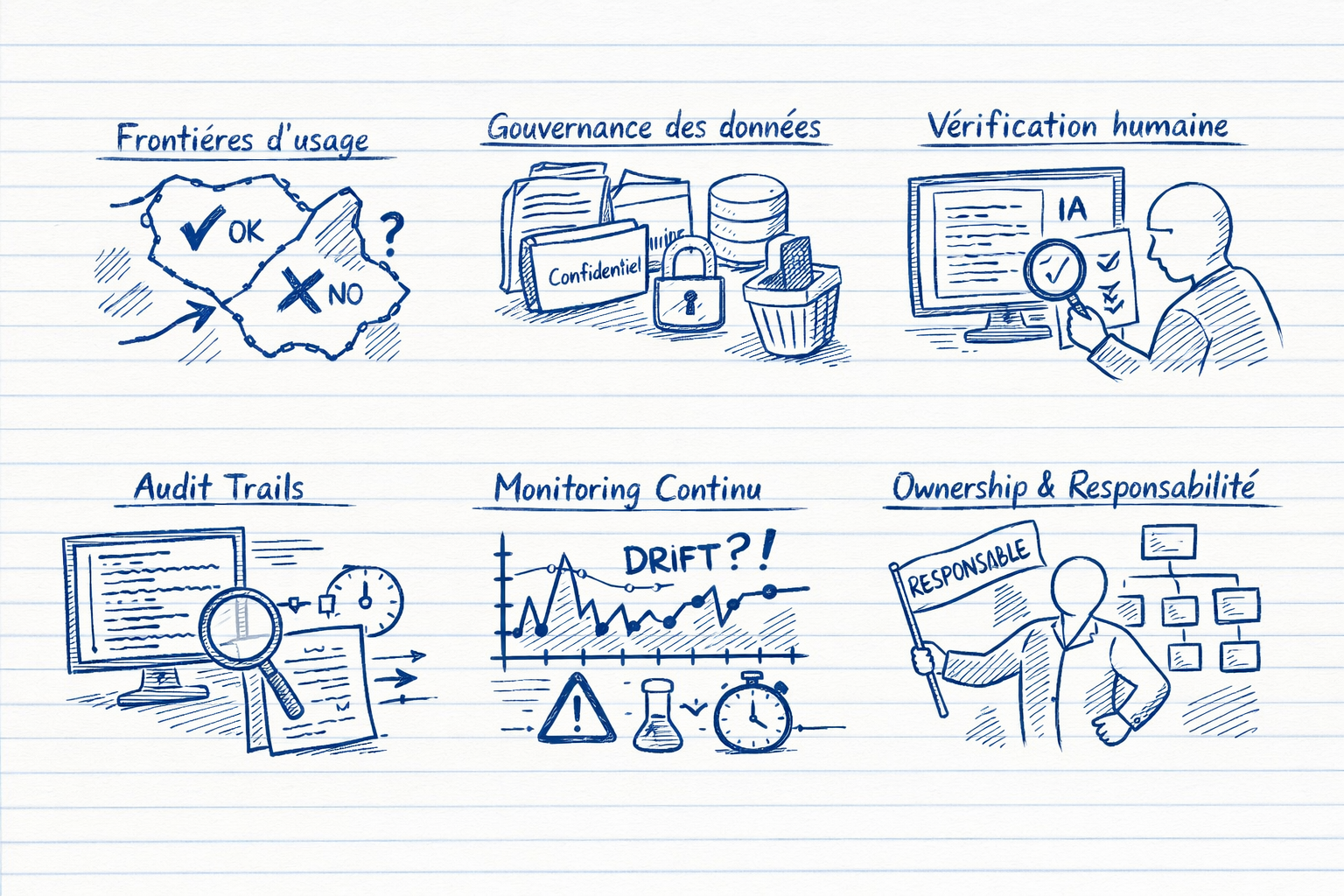
Gushchin wrapped up with a six-point checklist for making an AI tool "compliance compliant".
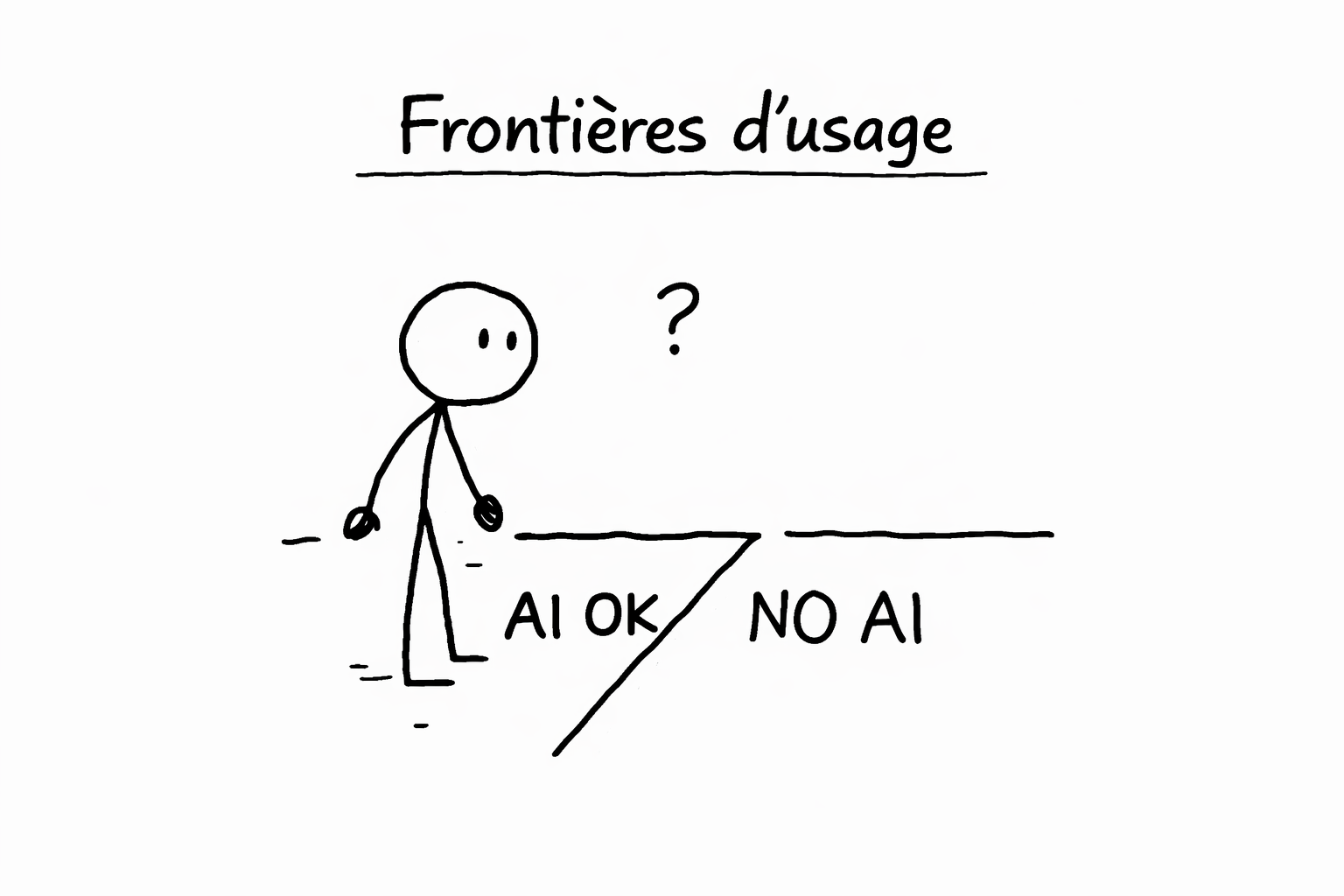
First: define use-case boundaries. Where AI may intervene, and where it may not. An undocumented scope is an undocumented risk.
Second: data governance. Classify inputs, control what enters the system, establish retention and deletion obligations.
Third: verification workflows. AI outputs are drafts, not final decisions. Every material step must include structured human review.
Fourth: audit trails. Log every AI interaction that contributes to a regulated decision. Reproducibility and traceability are not optional.
Fifth: ongoing monitoring. Model behaviour drifts over time. Testing must be continuous, not just at deployment.
Sixth: accountability ownership. Every AI-assisted process must have a named owner who can explain and defend it. Governance without ownership is theatre.
It's solid. It's structured. But it's incomplete.
What's missing
Gushchin's checklist covers the technical and organisational side well. But it rests on an implicit assumption: that the people involved will play along.
There's nothing on human fallback. What happens when the AI gets it wrong and nobody checks? Verification workflows look great on paper, but if the person at the end of the chain blindly trusts the output, the workflow is worthless.
There's nothing on upstream quality culture. If a team has no rigour without AI, it won't have any with it. Deploying a tool on a shaky foundation is automating chaos.
There's nothing on user training. People use AI without understanding its limits. They don't know what an LLM can and can't do. And they're asked to validate outputs they're not equipped to evaluate.
And there's nothing on change management. Introducing AI into a compliance process is a major change. Without support, without communication, without progressive upskilling, you get rejection or complacency. Often both.
The checklist is technical. The problem is human.
The real problem is people
The core issue isn't AI. It's compliance itself.
Most people don't understand what compliance means. They see it as an administrative constraint, a box to tick, something someone else handles. Not as a collective responsibility.
And by default, people are lazy. That's not a judgment. It's a systems design observation. When a shortcut exists, it will be taken. When a step can be skipped, it will be skipped. That's baseline human behaviour.
AI doesn't create this problem. It amplifies it. It gives a perfect excuse to stop thinking. Why review an output when "the AI did it"? Why verify a decision when the system looks confident? The complacency that already existed in manual processes will explode with automation.
The tools exist. The checklists too. But there's a priority that comes before all of that: addressing the human factor. Without that, we're putting padlocks on an open door.
My takeaway
My note from this session fits on one line: keep AI away from critical elements.
Not because the technology isn't ready. The testing tools exist, Gushchin's checklist is a solid starting point, and monitoring approaches are improving. The technical framework is moving forward.
But the human foundation isn't there. As long as teams don't understand what compliance actually means, as long as quality culture isn't in place without AI, adding intelligent automation on top will only accelerate mistakes.
We trust AI when we've first learned to trust our own processes.
Swiss Testing Day is an annual conference dedicated to software quality, held in Zurich. The 2026 edition, "Guardians of Trust -- Defining Quality in a Dangerous Decade", took place on March 26.
Find my other conference takeaways on my blog. You can also follow me on LinkedIn for thoughts on QA, gamification, and quality culture.